Important architectural terms that every architect should know!
In the world of architecture, words are the tools of communication—bridging ideas and designs into reality. Have you ever been in a meeting where you didn’t understand a technical term? Or maybe you need to express your ideas more effectively?
Mastering key architectural terminology not only enhances your understanding of concepts but also improves communication with clients and colleagues.
Join us as we explore 100 essential words that every architect must know, and discover how these fundamental terms can elevate your professional skills to a new level.
Basic Architectural Concepts Every Architect Should Know
1. Fundamental Terms in Architecture
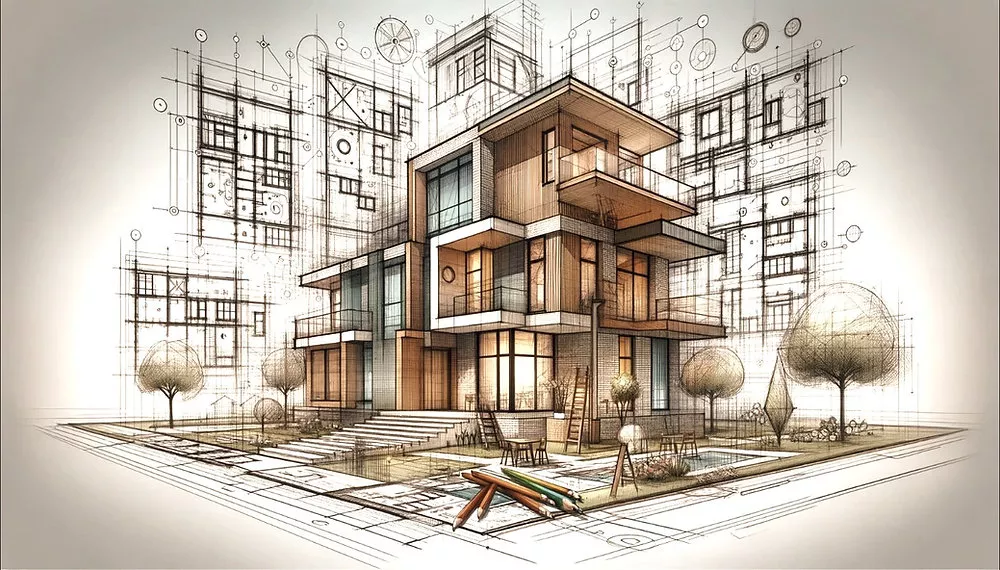
✔ Plan: A 2D representation of a building displaying all rooms and spaces.
✔ Facade: The exterior view of a building from a specific angle.
✔ Section: A vertical cut-through of a building to show interior details.
✔ Scale: The ratio between the actual size of an element and its representation on a drawing.
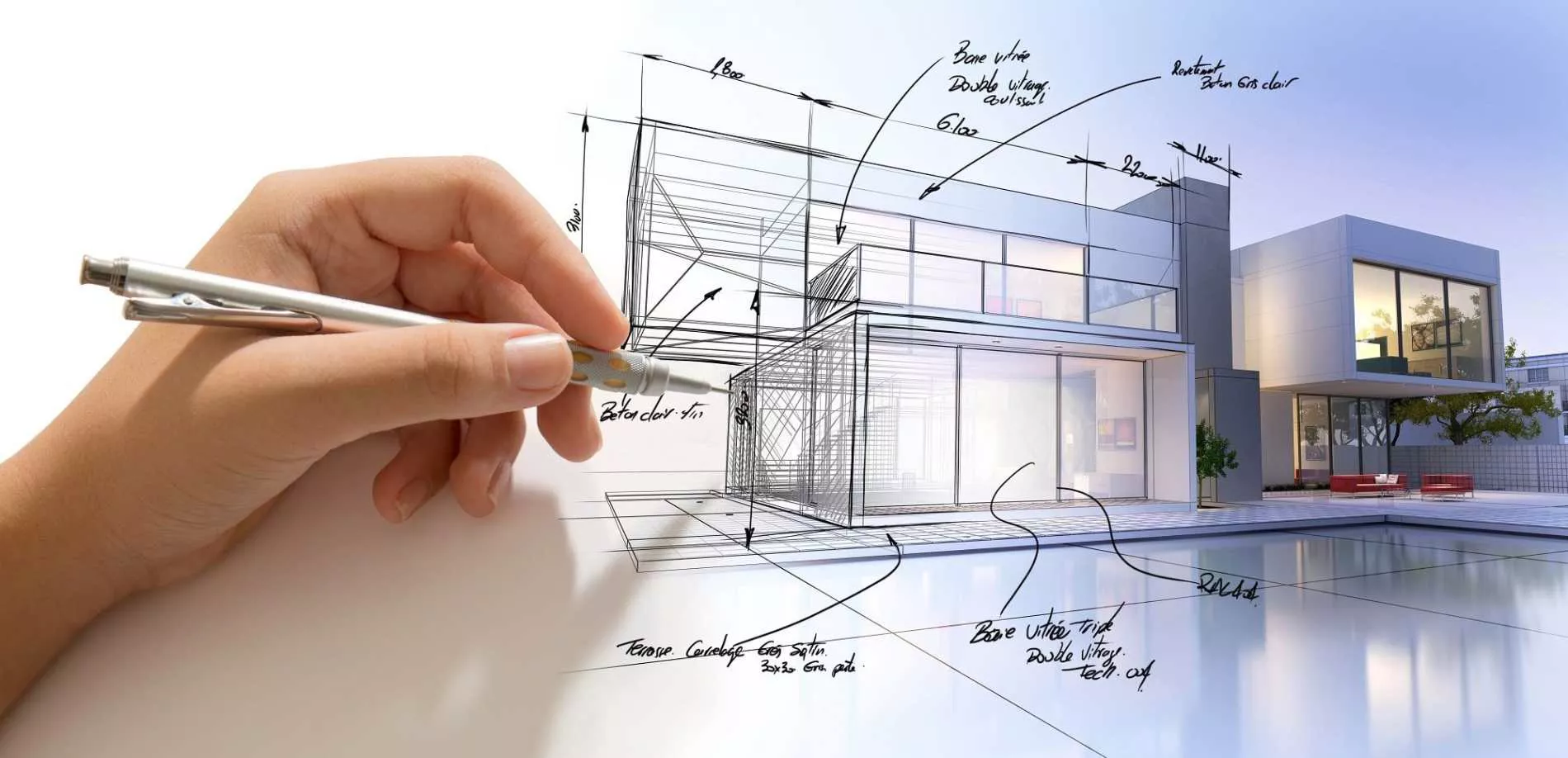
✔ Sketch: A hand-drawn conceptual drawing representing an initial idea.
General Architectural Terms and Their Role in Design
✔ Concept: The underlying idea and philosophy behind a design.
✔ Aesthetics: The visual and artistic aspects of a design.
✔ Ergonomics: Design principles that enhance human comfort and usability.
✔ Form: The overall shape of a building or design.
✔ Space: A defined area within an environment intended for a specific function.
Interior & Exterior Design Terminology
✔ Circulation: The movement pattern of people within a space.
✔ Building Envelope: The exterior shell of a building, including walls, roofs, and facades.
✔ Ambient Lighting: The use of light to set the mood and functionality of a space.
✔ Color Palette: A selection of colors used in an interior or exterior design.
✔ Terrace: An outdoor space connected to the main building structure.

Materials & Construction Terminology
✔ Concrete: A durable building material made of cement, sand, and water.
✔ Steel: A strong material used for structural frameworks.
✔ Brick: A common material for walls, often used for structural and aesthetic purposes.
✔ Wood: A natural building material used in floors, walls, and furniture.
✔ Glass: Used in windows, facades, and partitions to allow transparency and light penetration.
Technical Terms in Construction
✔ Foundation: The lower part of a building that supports its weight.
✔ Column: A vertical structural element that transmits loads.
✔ Beam: A horizontal element that carries the weight of ceilings or walls.
✔ False Ceiling: A secondary ceiling used for aesthetics or acoustic improvement.
✔ Expansion Joint: A gap left in structures to prevent cracks due to expansion or contraction.
Architectural Styles & Their Terminology
Architecture is more than construction—it’s an art, a language, and a philosophy expressed through different styles. Understanding architectural styles helps in appreciating historical and cultural evolution while broadening your professional perspective.

Key Terms in Different Architectural Styles
✔ Modern: Emphasizes simplicity, functionality, and minimal ornamentation.
✔ Classical: Inspired by Greek and Roman architecture, featuring symmetry, columns, and decorative details.
✔ Islamic: Characterized by geometric patterns, arches, and intricate tilework.
✔ Gothic: Recognized by pointed arches, stained-glass windows, and elaborate ornamentation.
✔ Minimalism: A design philosophy focusing on simplicity and removing unnecessary details.
Aesthetic & Artistic Design Terms
✔ Symmetry: Balanced arrangement of elements for visual harmony.
✔ Rhythm: The repetition of patterns or forms to create movement.
✔ Contrast: The difference in colors, materials, or shapes to attract attention.
✔ Harmony: A cohesive integration of various design elements.
✔ Color Palette: A set of coordinated colors used for space design.
Technology & Tools in Architecture
Modern technology is transforming architecture, allowing designers to visualize and execute projects with higher precision. Digital tools, 3D printing, and virtual reality are reshaping the industry.
Essential Software for Architects
✔ AutoCAD: A tool for creating precise 2D and 3D architectural drawings.
✔ Revit: A software for Building Information Modeling (BIM) and team collaboration.
✔ SketchUp: A simple yet powerful tool for 3D modeling and conceptual design.
✔ 3ds Max: Used for advanced rendering and animation in architecture.
✔ Rhino: A tool for complex shape modeling and parametric design.
Emerging Technologies in Architecture
✔ BIM (Building Information Modeling): Digital modeling of building components for efficient project management.
✔ 3D Printing: The creation of architectural models and components with high precision.
✔ Augmented Reality (AR): Merging digital elements with real-world environments for design visualization.
✔ Artificial Intelligence (AI): Using machine learning to optimize architectural designs.
✔ Virtual Reality (VR): Simulating spaces to allow clients and designers to experience them virtually.
Sustainability & Green Architecture Terminology
Sustainability is a key focus in modern architecture, integrating eco-friendly materials and energy-efficient solutions to reduce environmental impact.
Key Terms in Sustainable Architecture
✔ Passive Design: Utilizing natural resources to regulate temperature and lighting.
✔ Sustainable Materials: Materials with minimal environmental impact.
✔ Solar Energy: Using solar power for electricity and heating.
✔ Recycling: The process of reusing materials to minimize waste.
✔ Thermal Insulation: Materials that reduce heat transfer in buildings.
Eco-Friendly Design Concepts
✔ Biophilic Design: Integrating natural elements into architecture for enhanced well-being.
✔ Carbon Footprint: The total greenhouse gases emitted during a building’s lifecycle.
✔ Net-Zero Homes: Buildings that produce as much energy as they consume.
✔ Natural Ventilation: Using airflow to cool spaces without mechanical systems.
✔ Rainwater Harvesting: Collecting and using rainwater for non-potable needs.
Project Management & Communication in Architecture
An architect’s success is not only about design but also effective project management and communication with clients, teams, and contractors.
Key Terms for Client & Team Collaboration
✔ Proposal: A document outlining project ideas, costs, and plans.
✔ Briefing: Meetings where project requirements are discussed with teams.
✔ Checklist: A tool to track progress and ensure all steps are completed.
✔ Feedback: Constructive suggestions for improving designs.
Project Planning & Management Terminology
✔ Project Scheduling: Organizing project phases with timeframes.
✔ Cost Estimation: Calculating expected expenses for a project.
✔ Quality Control: Ensuring that construction meets the required standards.
✔ Risk Management: Identifying and mitigating potential project risks.
✔ Gantt Chart: A visual representation of project timelines and tasks.
International Architectural Terminology
Architecture is a global profession, and working on international projects requires knowledge of commonly used architectural terms in different languages.
✔ Facade: The external appearance of a building.
✔ Plinth: The base or platform on which a building or column stands.
✔ Atrium: A central open space often seen in large buildings.
✔ Cantilever: A projecting structure supported only at one end.
✔ Pavilion: A freestanding structure used for exhibitions or relaxation.
Final Thoughts: Mastering Architectural Vocabulary
Mastering architectural terminology is key to professional success. By learning and consistently using these words, you will improve your communication, project management, and confidence when presenting ideas.
Which architectural term do you use the most in your work? Share your thoughts and experiences in the comments below!