
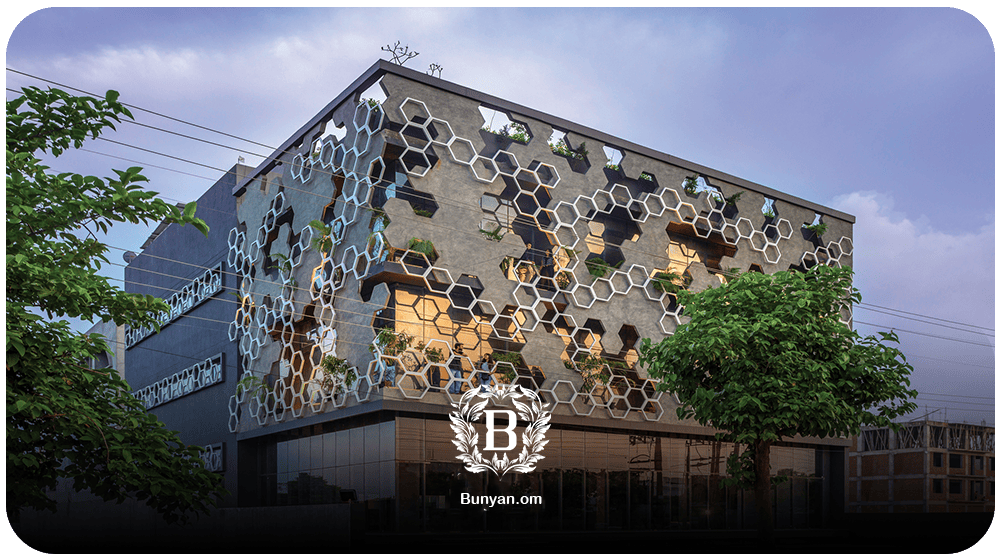
Discover the most popular materials in façade and interior design in 2025. From natural stone, wood, and glass to exposed concrete, metals, ceramics, and smart eco-friendly solutions, Bunyan Architectural Group in Oman explains the latest trends in sustainable architecture.
Introduction of the Most Typical Materials in Façade and Interior Design 2025
Architecture evolves every year with new trends, technology, and needs. The year 2025 is a defining moment in modern architecture, as the focus on sustainability, aesthetics, and functionality reaches its peak. The choice of material is an integral part of this process; materials that not only define the appearance and personality of a project but that also directly influence comfort, durability, and even the energy efficiency of a building.
In this article, Bunyan Architectural Group as a professional in interior design in Oman and façade design explains the most popular and widely used materials of 2025.
Natural Stone: Timeless and Always Popular
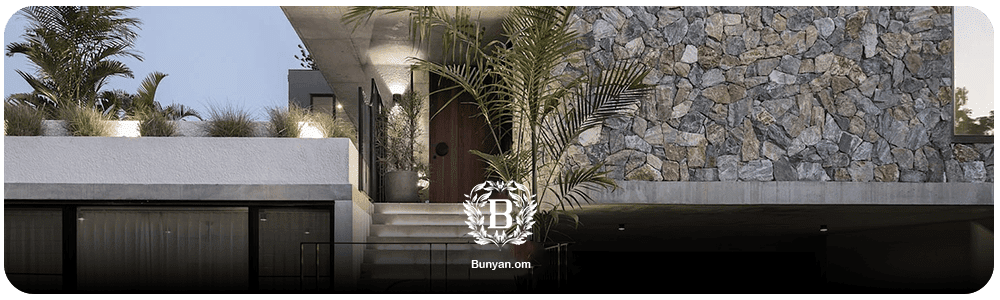
Natural stones have been the main materials used in façade design for decades. As of 2025, demand for natural stones such as travertine, marble, and granite will be high. The materials are that popular because they have the classy combination of beauty, strength, and opulence.
Used in façade design: Adding the white or light-colored travertine with textured designs gives a modern and ageless appearance to the building.
In interior design: White or gray marble for kitchen counters or feature walls in the living room creates a feeling of luxury and sophistication in the space.
Bunyan recently combined natural stone with glass in its Oman projects, designing facades that are contemporary but preserve the grandeur of old-world architecture.
Wood: Warmth and the Sense of Life in Space
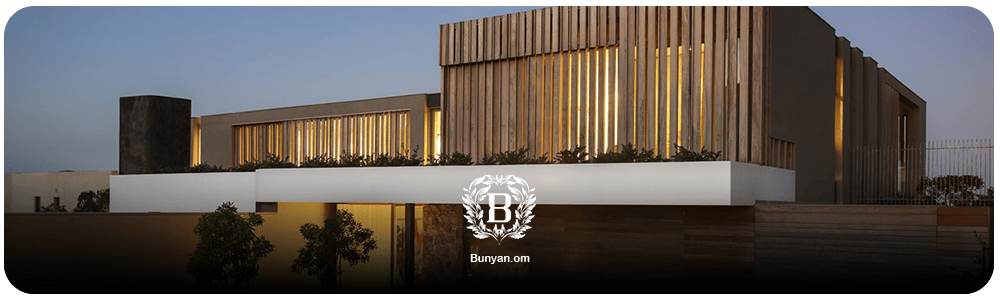
Wood is one of those materials that do not come and go within the design market. In 2025, wood in interior and façade design will be enhanced by a shift to higher sustainability and durability.
In façade design: Thermowood and treated woods are the best choice due to their intense resistance to weather. With concrete or glass, these products can create warm and modern façades.
In interior design: The use of wooden flooring, wall panels, and furniture creates the natural and soothing nature of the space.
In most of its interior design projects, Bunyan seeks to combine wood with modern materials such as metal and glass to create spaces that, although minimalistic, are full of energy and warmth. With its natural texture and color, wood creates a sense of peace and intimacy, whereas the transparency of glass and firmness of metal introduce a contemporary and dynamic element to the design. This kind of intelligent blending heralds a convergence of modernity and tradition—a place which is in sync with everyday life and offers a unique appearance. In reality, the Bunyan team demonstrates with this approach that interior design is not merely the arrangement of elements, but also art of organizing harmony between materials and respecting users’ emotional and practical needs.
Glass: Transparency and Connection with Nature
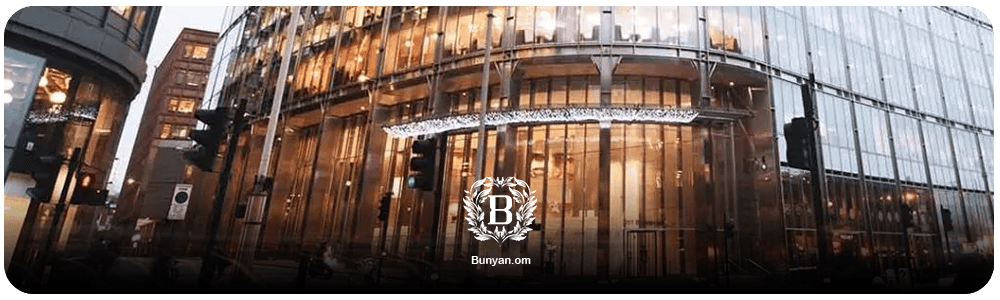
In 2025, intelligent glass and double-glazed will take center stage in architecture. Glass is no longer just employed for light admitting, but as an energy-saving device and mediator between the exterior and interior environments.
For façade design:
Intelligent and heat-resistant glass utilization enables one to control light and heat, which aids in green architecture.
In interior design:
Glass walls, partitions, and decorative glass provide openness and transparency to spaces.
In Oman Bunyan projects, floor-to-ceiling windows and special glass have not only beautified façades but also made them functional and sustainable.
Exposed Concrete: Modern Simplicity
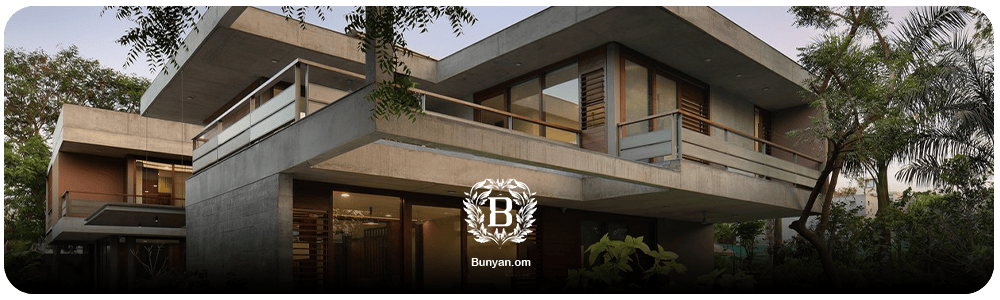
Concrete is no longer just a straightforward construction material. Exposed concrete has emerged as one of the most desirable and trendy materials in interior and façade design in recent times, and specifically in 2025. Its raw and natural texture at the same time exudes authenticity and futurism, creating an industrial, minimalist, and fashionable appearance.
In façade architecture:
Concrete exposed can create a simple and modern façade that offers personality and identity to minimalist and industrial designs. Its clean lines, natural texture, and muted colors produce an even ambiance in harmony with the urban environment without rendering the building invisible.
In interior design:
Concrete for walls, floors, or even decoration brings a modern and unique ambiance to a space. Paired with wood, metal, or glass, it achieves visual and thermal equilibrium, bringing intimacy as well as power. This intelligent alliance creates spaces that are vibrant, usable, and stunning.
Bunyan’s experience has proved that exposed concrete not only provides a modern and unique character to buildings but, due to its high degree of durability and resistance, is also a sustainable and long-term solution for urban buildings. In the majority of Bunyan’s projects, the blend of exposed concrete with other materials has created façades and interiors that, simultaneously, convey modernity, sustainability, and luxury—an experience that surpasses common design for residents and visitors alike.
New Metals: Steel and Aluminum
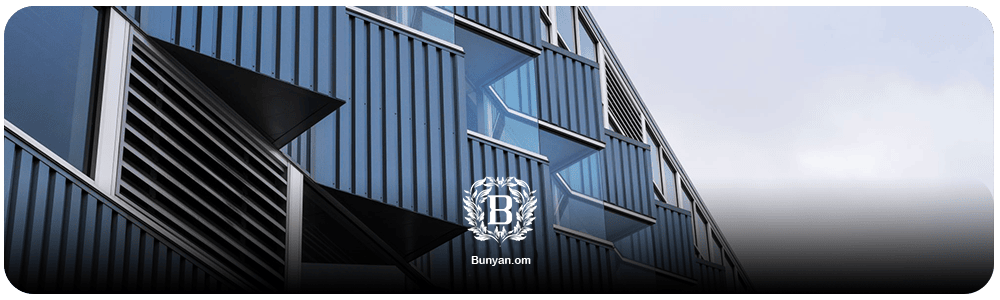
Metals, especially stainless steel and aluminum, will continue to be important in 2025 architecture.
In façade architecture:
Use of robust yet light aluminum frames results in modern and efficient façades.
In interior architecture:
Metal in modern furniture, chandeliers, and even wall finishes gives spaces a cool and industrial look.
In its recent work, Bunyan has combined glass and metal in order to get facades that are light, durable, and luxurious too.
Large-Format Ceramics and Porcelain
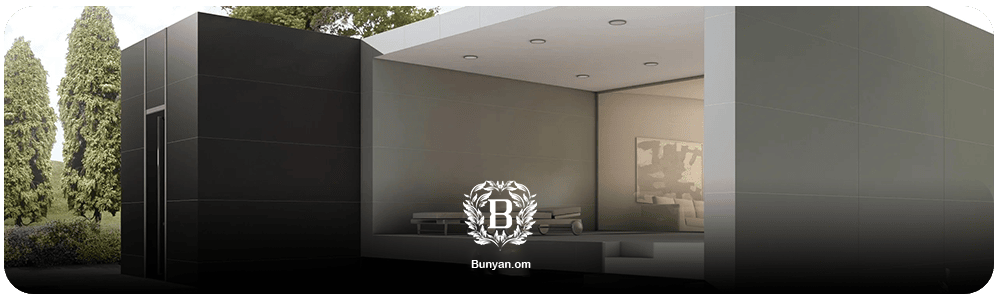
One of the most widely used materials in 2025 will be large slab ceramics and porcelain. These materials have a great deal of application in interior design because they are very durable and typical in their beauty.
In façade design:
Weather-resistant ceramics are a suitable choice for modern façades.
In interior design:
The use of large-size ceramics in walls and floors gives the interior spaces a luxurious and uniform appearance.
Green and Recycled Materials
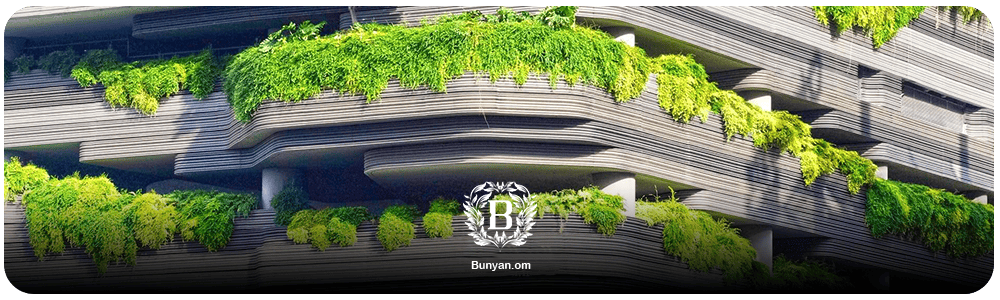
The year 2025 can be called the year of green architecture. The usage of green, recycled, and eco-friendly materials has become a necessity.
Recycled wood, green light-weight concrete, and chemical-free colors are some of the choices of architects next year.
These products not only make a contribution to nature but also give an original identity to design.
Considering sustainability, Bunyan has used such products in most of its projects in the context of providing both beauty and care for the environment in façade and interior design.
Smart and Future-Oriented Materials
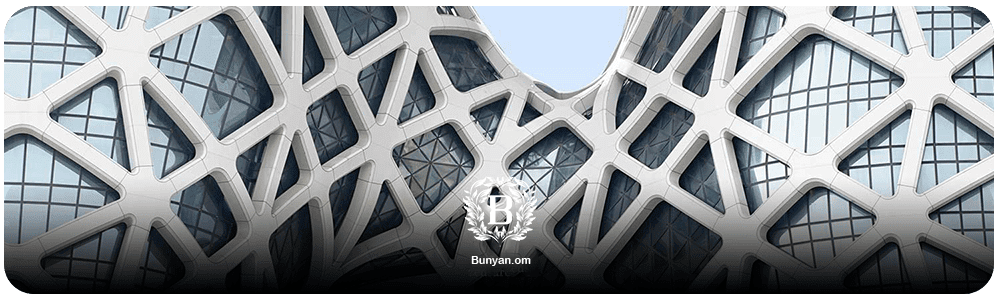
Technology is invading the field of architecture more than ever before in 2025. Color-changing glass, solar energy-harvesting material, and photocatalytic coatings are just a few to name this advancement.
These materials not only make the buildings look great but also make them energy efficient, directing architectural design towards a smart and sustainable future.
Conclusion
Material choice is the heartbeat of every architectural project. The year 2025 witnesses the fact that merging beauty, performance, and sustainability is more important than ever before.
Stone, wood, and glass remain popular.
Exposed concrete and modern metals introduce an industrial and minimalist look to projects.
Large-format ceramics and smart materials bring a vision-oriented aesthetic to architecture.
As one of Oman’s leaders in façade and interior design, Bunyan takes it upon himself to create projects that are refined, practical, and sustainable using the latest materials from across the world.